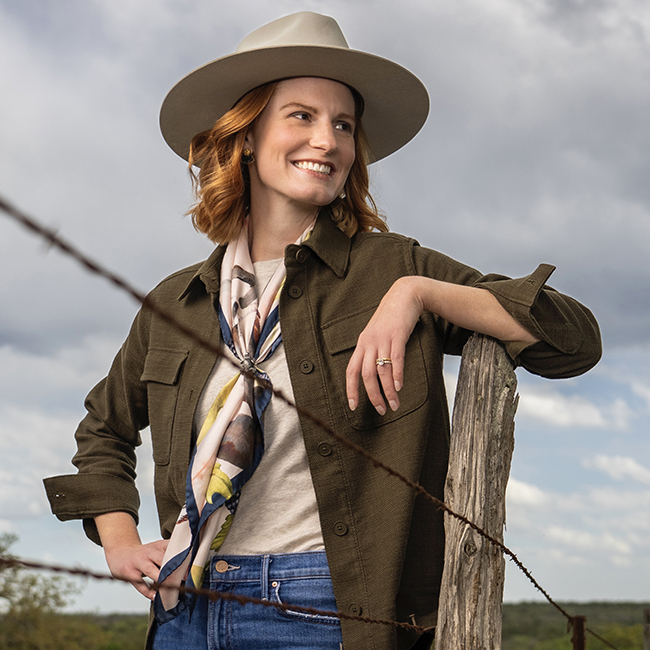
Vice President
1. In your professional life outside of TWAF, what is your primary area of expertise, and how do you apply those skills to your role as an TWAF Officer?
As a landowner and mother of two future land stewards, I have a very personal connection to the mission of TWAF. It is vital that Texans understand the role that private lands play in conservation and the impact that work has on the state as a whole.
2. Which TWA program resonates the most with you and why?
The wonderful thing about all of the TWA programs is how well they work together to promote TWA’s mission, so it’s difficult to pick just one. However, I have chosen to dedicate most of my time to our Conservation Legacy education programs. Growing up, I had the opportunity to make friends from all walks of life and from different parts of the state. I learned quickly that not everyone had the chance to learn about wildlife conservation and land stewardship first hand as I did. I believe these programs are absolutely essential to the future of our wild places and wild things.
3. What is your favorite “wild place” in Texas, and how has that landscape shaped your perspective on wildlife conservation?
It’s hard to beat the smell of greasewood in the crisp cool air of a West Texas morning. The diversity of species, landscapes, weather- you could enjoy much of what Texas has to offer all within one day. Often in extreme drought with a handful of gully-washer summer monsoon seasons, the land in West Texas has taught me that wildlife conservation is more a work of passion than of science.
4. What does ‘leaving a legacy’ for the next generation of Texans mean to you?
It really comes down to educating the next generation about how conservation and private land stewardship directly impacts their daily life, even if they never leave the city limits. As the Texas population grows and becomes more urban, each new generation gets further removed from the land. They can’t be expected to understand what they’ve never known.
5. If you had to pick one iconic Texas species or outdoor tradition that defines the spirit of our state, what would it be?
Even prior to attending Texas Christian University, I always loved the Texas Horned Lizard, or horny toads as we called them. When I was young, on the rare occasion we saw them in the road, we slammed on the brakes and jumped out of the truck to get a closer look. Getting a great photo of a horny toad was right up there with taking a big buck. As Texans we love and are passionate about all that makes our state unique.
78
+
Projects
Completed
Duis iaculis magna diam neque
Sed aliqua commodo aliquet.